The Most Difficult Song to Perform Live
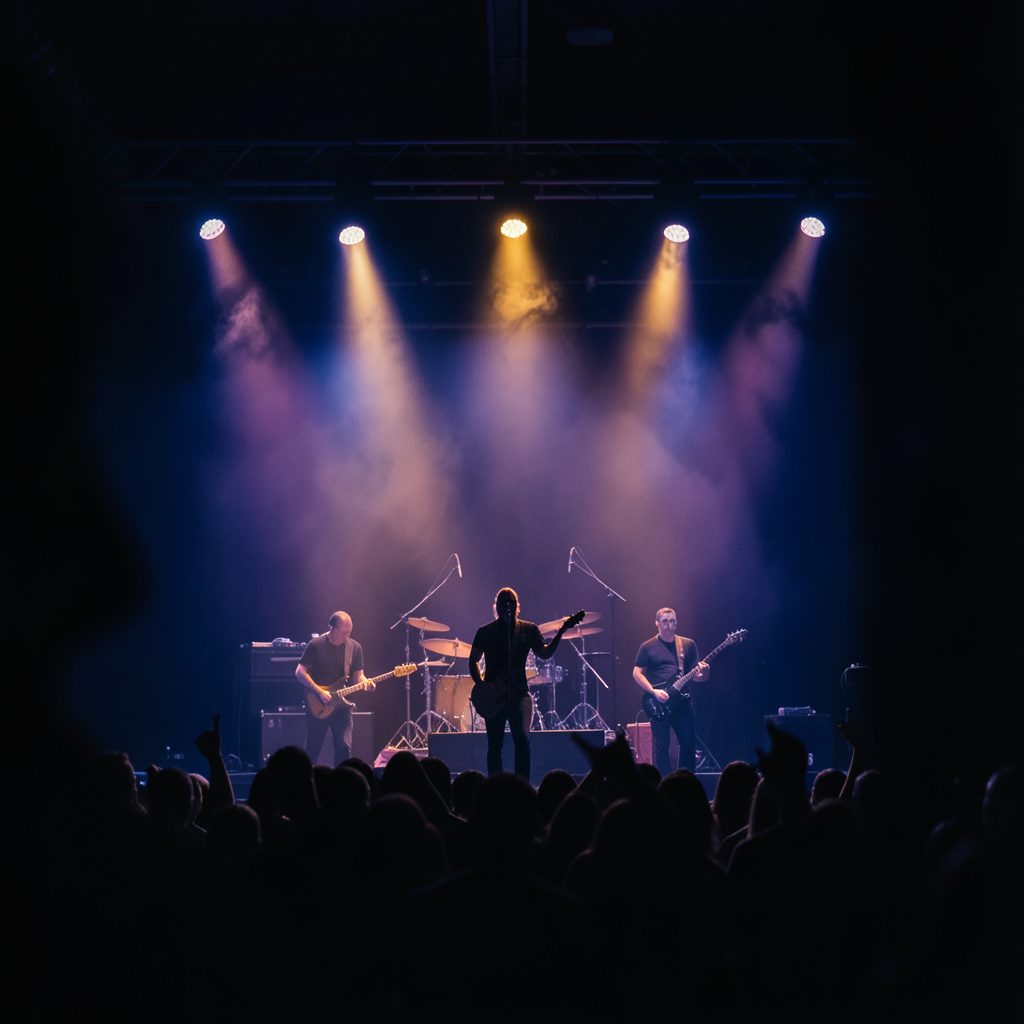
Every band has one song that changes shape the moment the room fills up. In the studio it sits exactly where the producer wants it, but under stage lights, with a thousand voices shouting the chorus back at you, it becomes a completely different animal. Ours is "Living a Lie", and it has earned the reputation of being the hardest track in our set to play live.
Ask any roadie or crew member and they will point to the last number of the night. Everything before it builds; the final song has to land on its own, with no encore to hide behind and no second wind to borrow. That is the slot where "Living a Lie" lives, which means its small imperfections get amplified by everything that came before it.
Difficulty is not simply about the notes. It is about the room, the weather, the monitor mix, the amount of adrenaline in your hands, and whether the crowd has already sung the song for you. A track that is comfortable at rehearsal in Newcastle can fall apart in an outdoor field in January with the temperature climbing and the power supply working hard.
We have rewritten the arrangement more than once, retuned it, changed the tempo, and argued about the ending for longer than we would probably admit. This is the story of the one song that still keeps us on our toes.
The song that has to land on its own
Most sets are built in arcs. "16 Days" and "Addicted" are the peaks, the two songs the room takes over, and they sit in the middle and near the front of the set where the energy is still climbing. "Living a Lie" sits at the end, when everybody is tired and the only thing holding the night together is the song itself.
If the piano intro slips a beat, if the vocal lands flat after ninety minutes of shouting, if the lights come up on the chorus instead of dropping to a single spot, the room feels it. There is nowhere to hide. We have learned to treat that closer as the hardest working part of the show rather than the easy finish.
Where the work actually sits
The bridge is where it bites. The line climbs into a range we cannot hold forever, and it arrives right after the part of the set where we have already spent most of our air. The original recording also leaned on a doubled vocal and a keyboard figure that hid a lot of the timing.
Live, there is no overdub and no safety net, so we rebuilt it. The vocal arrangement is stripped back to one voice in places, which means the band plays under you instead of carrying you. The outro was pulled back about twenty beats so the last chorus has room to breathe, and the tempo no longer creeps up on the final line. Same song, different road.
The soundcheck we give this one song
We give "Living a Lie" a longer soundcheck than anything else in the set. The keyboard sits louder than we would normally run it, the wedge monitors go up so we can hear the piano without the crowd swallowing it, and a spare guitar stays on stage as insurance for the capo work.
How other players react to live rigs and monitoring is something we follow closely, and reading how other bands solve similar problems on bigger stages through Coda's music coverage has changed how we set our own nights up. We also ask the crew to walk the room during the changeover, because a system that hums in a hall behaves very differently on a festival main stage.
What an Australian summer stage adds
Playing a closing song outdoors here is a different discipline to playing it in a club. In January, Bar on the Beach in Newcastle can be beautiful and warm, but further out at festival fields such as Big Sound at Lennox Head or The Valley in the Hunter Valley, the gear runs hot, the generators work overtime and the air-con unit backstage is doing its best.
The audience plays a part too. Australians are generous but blunt; they will tell you if the singer is flat, and they expect the band to hold the room. There is also the ritual shout that runs through our sets, the call and response at the end of a number that lets a tired crowd stretch its legs. Getting that moment right before a closing song is worth more than any amount of tuning.
The songs that only look easier
"We Are Not Alone" is technically the fiddliest, because of the keyboard part and the tempo changes that have to line up exactly. "Addicted" needs the room to sing, and we have had to move it a semitone when the crowd was sitting below the key. "Where Are You Now" is quiet, and holding a whisper over a loud PA in an open field is harder than it sounds.
Set against each other, the four candidates stack up like this:
| Song | Main difficulty | Vocal load | What actually goes wrong |
|---|---|---|---|
| Living a Lie | Sustained vocals after a long set | Very high | The bridge arrives short of breath |
| We Are Not Alone | Keyboard timing and tempo changes | Medium | Parts drift out of alignment |
| Addicted | The crowd has to carry the chorus | High | Key sits above what the room can reach |
| Where Are You Now | Volume control in a loud room | Low | The quiet gets swallowed by the PA |
None of these are easy, but only one of them gets the final slot, and that changes everything about how it is rehearsed and how much the band listens for each other on the night.
What we watch for and where we play next
Before we take the stage, the crew checks a few things that matter more for this song than any other:
- A clean run of the bridge at half speed, with no shortcuts
- Monitor levels that leave the keyboard audible in the wedges
- A spare guitar, spare strings and a tuner checked twice
- Water on stage, because the last chorus is a long way from the encore
And the rest of Australia gets a run of shows across the year, usually starting close to home:
- Newcastle and the Hunter Valley, our home ground and our first rehearsal rooms
- Sydney and Melbourne, where the rooms are tighter and the crowds are louder
- Brisbane, the Gold Coast and Byron Bay, which tend to be the warm ones
- Tamworth and the festival circuit, where a rock band still gets a very country audience
See the next show up close
The set changes from night to night, but "Living a Lie" stays where it is, and you will hear exactly how we handle the parts that have broken us in the best way. The full run of dates, photos from recent nights, news on the record we are working on and the new merch are all on Saving Abel's official site.
Tickets in Australia sell quickly for the headline rooms, so grab seats early, set an alert for the tour announcement and bring the friends who complain about the closing song being slow. That complaint is the point: it is the hardest thing we play, and finishing the night on it is the only ending that feels like us.