How Our Stage Lighting Has Transformed Over The Years
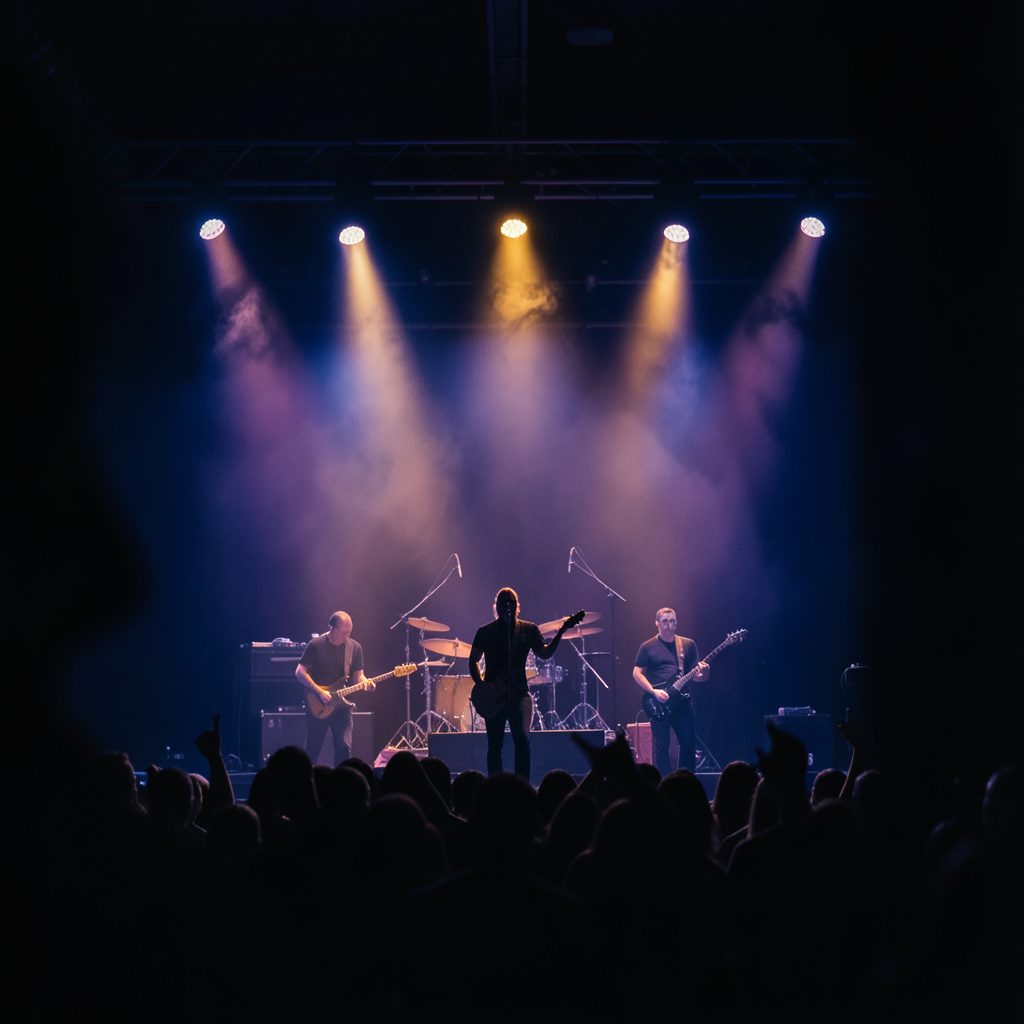
When Saving Abel hits the stage, the crowd sees colour, movement and heat before we play a single note. Lighting has always been the silent member of the band, shaping how every lyric lands in the room. Over more than two decades on the road, our rig has gone from taped gels and a single par can to pixel-mapped bars that pulse with the kick drum.
We learned our craft in basements and roadhouses, where the house electrician sometimes handed us a spare fixture and wished us luck. Bigger stages and longer tours taught us the audience remembers the show, not just the setlist, so every few runs we rebuilt the lighting concept chasing something louder or more cinematic.
Touring Australia stretches that discipline further. The distances between Melbourne and Perth force a lean package, while rooms like the Hordern Pavilion in Sydney and The Tivoli in Brisbane reward a design that adapts to wide thrust stages and intimate balconies alike.
| Era | Core Fixtures | Control | Signature Look |
|---|---|---|---|
| Early years | Par 64 cans, gel sheets | Two-scene preset desk | Single coloured wash |
| Moving head era | Scanners, wash movers, gobos | Console with designer | Beams across the room |
| LED wash era | RGBW washes, blinders | Console macros | Audience-blind washes |
| Pixel era | Pixel bars, cold sparks | Timecoded console | Chasers synced to song |
Par Cans And Gels In The Early Days
Our first proper touring rig was four par 64 cans clipped to a foldback stand, with gel sheets taped on by hand. The light board was a two-scene preset desk one roadie operated from the side of the stage. Each song got a colour guess, and the rest of the show relied on stage wash and goodwill.
Affordable and forgiving, that setup toured southern pubs for years. Crowds at the Astor Theatre in Perth and the smaller Adelaide rooms taught us that intimacy beats scale when the song does the heavy lifting. We learned to do more with less, and that mindset still shapes our designs today.
Moving Heads And The First Real Design
The first major upgrade was a pair of scanner mirrors and a small moving head wash, hired locally whenever we crossed a border. Beams cut through haze, gobos stamped textures on the drum riser, and the room felt three times larger. It was also the first time we hired a dedicated lighting designer rather than asking the sound engineer to babysit the desk.
That designer joined us in Sydney for a run that included the Metro Theatre, where we discovered how angles read from the balcony versus the floor. Room shapes in Australia vary wildly, from shallow pubs to soaring venues like the Sidney Myer Music Bowl in Melbourne, so flexibility mattered more than fixture count.
The LED Wash Revolution
Replacing par cans with LED washes changed the gear list and the rehearsal schedule at once. RGBW mixing meant we could colour-match album art, dim cleanly without colour shift, and run cooler on long summer nights. Power draw dropped, trucking weight dropped, and the production manager stopped pacing at load-in.
It also opened room for audience-blind lighting, where the crowd is lit from the front while the band plays in silhouette. That look became a staple of headline sets through Brisbane and the Gold Coast rooms where outdoor stages amplified every wash.
Atmosphere, Haze And Audience Sensation
A flat beam in clean air is just a flashlight, so we invested early in water-based haze and a low-lying fog unit for the slower numbers. The right density turns a single wash into a wall of colour and lets gobos project properly across the back of the venue.
For Australian summer shows we also switched to a haze fluid that complies with indoor venue policies, including the strict rules at heritage theatres like the Capitol in Melbourne. Tour feedback from local crew helped us tune fan speeds so haze sits at chest height without creeping into the front rows.
Pyro, Pixel Mapping And Sync
The most visible leap came when we wired pixel-mapped LED bars to the lighting console and triggered them with click tracks. Each cymbal hit, chorus lift and breakdown now has a matching flash, sweep or chaser, so the audience feels the song rather than only hearing it. Cold sparks add punctuation on the bigger numbers, fired only where fire codes permit.
We piloted that rig across a regional run through Geelong and Newcastle, then carried it into bigger rooms like the Enmore Theatre in Sydney. Australian production crews were quick to flag cable runs and rigging loads, helping us refine the design before we took it overseas.
Touring Lean Across The Australian Map
Touring Australia teaches you pack discipline. A rig flying from Fremantle to Hobart cannot weigh what a US fly-date rig carries, so we trim every cable run and pre-build every sub-hang. We share backline with local bands on support slots, which means fixtures must clamp onto unfamiliar truss and power phases without a rehearsal day.
These constraints turned into creative fuel. Touring Perth to Cairns in a single loop demands a design that looks fresh on night one and night twelve, so the console show is layered with alternate looks the LD can pull out depending on the room response.
The Next Phase Of Our Visual Direction
Looking ahead, we are testing battery-driven uplighters for eco-festival slots, including a hoped-for return to Australian summer festivals. We are also exploring projection mapping on draped scrims for smaller theatre dates, giving a big-room feel in a 600-cap room. The link between lighting and emotion remains the brief.
Backstage Habits That Lift The Room
- Carry spare bulbs and spare colour frames for every par can, even on an LED rig
- Pre-label every cable with venue tap numbers for the local crew
- Brief the support band on haze fluid preferences before soundcheck
- Walk the room at doors-open to catch sightline blind spots
- Keep a printed copy of fire code notes for cold sparks in each state
If you want to dig into how other productions structure their rigs, this lighting review resource breaks down several touring setups. Grab a ticket to the next Australian run and watch the rig shift from the first downbeat to the last chorus. See you in the room when the houselights drop.