Keeping the Energy Locked In: Our Approach to Residency Shows
A residency means showing up in the same room two, three, or five nights in a row. For Saving Abel, who cut our teeth on long rock sets in the American South, the format demands a discipline one-off gigs do not require. The crowd expects the band to feel as alive on night four as night one.
Australian fans have handed us some of the most loyal residency crowds we have played for. Audiences in Sydney, Melbourne, and Brisbane buy multi-night passes and study the setlist hard enough to know when we have moved a song. That level of attention raises the bar at venues like The Triffid.
Keeping energy consistent across consecutive nights is less about motivation, more about routine. We treat the residency like a tournament: identical pre-show rituals, mapped warm-ups, and a stagecraft plan we revisit every afternoon. Repetition removes guesswork.
Here is the playbook we lean on when the run stretches past a single weekend, whether we are loading into a 600-cap room in Adelaide or a warehouse in Fremantle.
Locking in the setlist spine
The first night of any residency gets plenty of attention, but the setlist is actually written for night seven, not night one. We build a chronological arc that grows like a record: a fierce opener, a lull with a ballad, then a punishing run of singles toward the end.
Tempo, key, and vocal rest points all sit on a printed chart taped to the stage. The singer knows when he gets his first real water break, and the guitarist plans his solo to land as the crowd peaks. Without that skeleton, night three turns into a guessing game.
Vocal warm-ups and physical prep
Every member runs the same warm-up on every show day. Vocalists warm up ninety minutes before doors with sirens, scales, and the opening verse at low volume. Guitarists move from unplugged to the drive channel. By soundcheck, we are at 70 percent.
Touring Australia in winter, the dry air from reverse-cycle cooling can flatten a voice by night three. We counter it with steam, hydration measured in litres, and a humidifier in the dressing room. APRA AMCOS paperwork happens earlier so the cords stay protected.
Reading the room from the pit
Cueing a room is harder on night two because the audience already knows what is coming. We lean on eye contact, small variations in spoken intros, and changing a lyric when the mood asks. The trick is reading the first three songs honestly.
Room temperatures vary wildly too. A winter run in Hobart means layered-up fans in jackets, while a summer stretch in Brisbane brings bodies, beer, and open windows. The set never changes shape, but the way the singer talks to the crowd does.
Relying on the crew offstage
The four of us on stage carry about half the work. The sound engineer, monitor tech, tour manager, and merch person hold the rest together. Our FOH guy recalibrates the mix nightly so the guitar still cuts and the vocals sit forward when the room fills differently on a Saturday.
Crew briefings happen every afternoon. We cover the previous night, encore length, any noise complaints, and promoter requests. Australian licensing rules around volume in mixed-use neighbourhoods, especially in rooms in Fitzroy or Newtown, are real and we factor them in early.
| Element | One-off tour show | Residency night |
|---|---|---|
| Setlist | Rebuilt every night | Locked spine, one swap |
| Sound mix | Single snapshot | Three room-specific snapshots |
| Warm-up | Thirty-minute routine | Ninety-minute routine |
| Stagecraft | Loose cues | Choreographed |
| Crew briefing | Quick check-in | Full afternoon debrief |
| Vocal care | Between cities | Between sets and off-nights |
Stagecraft and visual cues
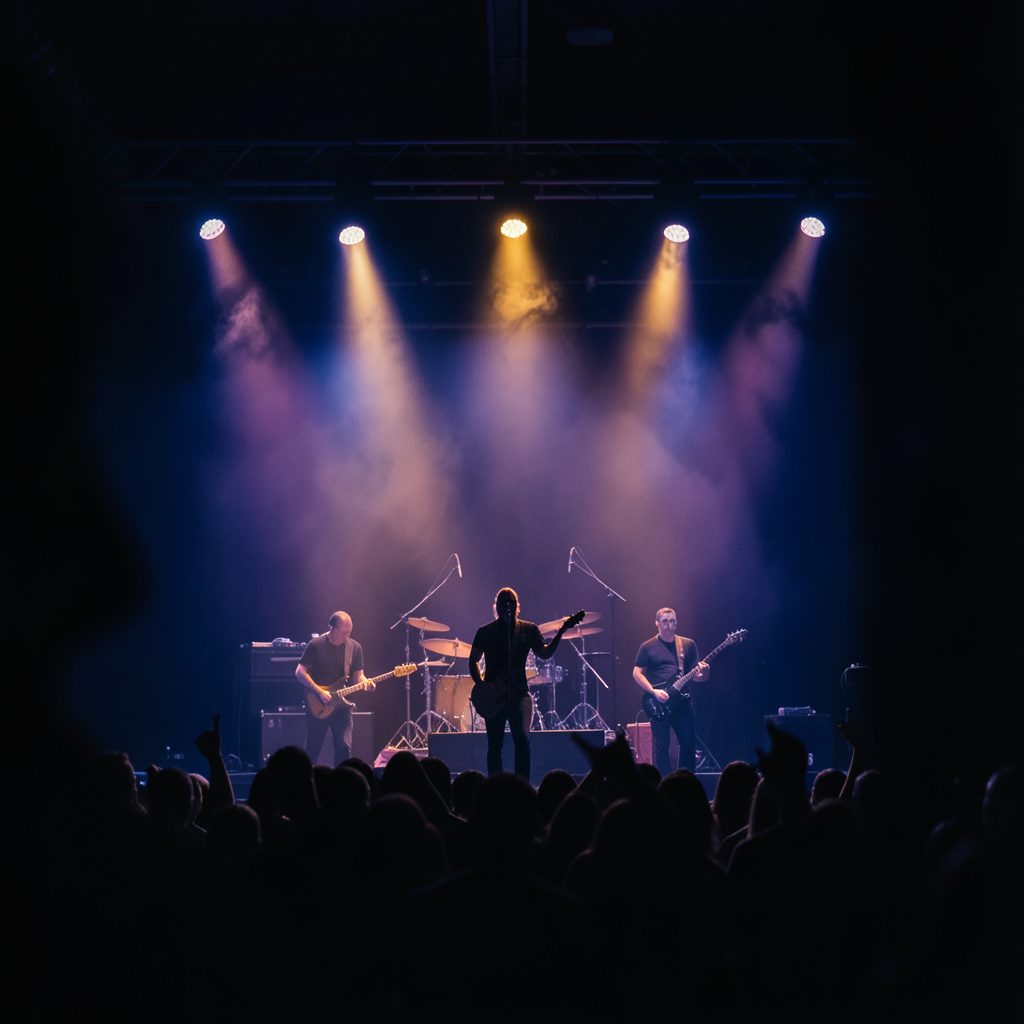
Energy on stage is partly physical. We plan where each musician stands, where the singer holds the microphone, and when the guitarist steps forward on a solo. The cues are choreographed to the bar but never feel scripted.
Lighting carries the rest. A strobe on the chorus, a warm wash on a ballad, and a blackout before the encore all push the audience's attention without burning the band out. Our album artwork process has bled onto the stage, tying the set design to the merch in the official store as one visual world across the run.
The sound mix as energy barometer
The front-of-house mix is the biggest lever for shaping crowd energy. The room changes every night. Friday is packed and loud, Tuesday is loose. The mix has to ride that wave without feeling smaller or bigger than it should.
Our engineer saves three EQ and compression snapshots in the console: half-empty soundcheck, full room, sweaty Saturday crowd. Switching between them at the top takes thirty seconds and shifts how the audience reacts to the first chorus.
Habits worth handing down
If you are a younger act staring down a multi-night run, here is what we would hand down. None of this is fancy, but these habits carry a young band through the three-night hump more than any gear upgrade ever could.
- Build the set for night seven. The rest will look after themselves.
- Map rest points, mic changes, and solos on a chart with the kit.
- Brief the crew every afternoon, even when nothing went wrong.
- Treat vocal care as part of the show, not when a note goes sharp.
- Watch the first three songs and let the room write the encore.
Grab a ticket through the band store, drop in for soundcheck where the venue allows, and bring a friend who needs to hear the deep cuts. Saving Abel will see you in the pit.