Saving Abel’s Most Elaborate Stage Setup
Saving Abel’s live identity has always depended on more than amplified guitars and a strong rhythm section. The band’s stage presentation combines Southern-rock attitude, hard-rock energy, bold lighting, and a visual atmosphere that gives each performance its own scale.
The most elaborate version of a Saving Abel stage setup would bring those elements together through a layered production design. Rather than relying on decoration alone, the arrangement would support the band’s sound, keep the musicians visible, and give fans memorable moments from the opening song to the final encore.
For a touring rock band, the best production is also practical. Equipment must travel, assemble quickly, and adapt to venues ranging from outdoor festivals to smaller clubs. That balance between spectacle and mobility is what makes a live setup effective.
A Bigger Visual Identity
A large Saving Abel production begins with a clear visual language. The stage should feel rugged, direct, and instantly recognizable, using deep color washes, textured video backgrounds, and strong silhouettes instead of an overly polished pop aesthetic.
Brand identity can guide everything from the backdrop to the side-stage banners. The band’s visual evolution offers useful context for understanding how logos, lettering, and artwork can translate into a concert environment without overpowering the performers.
A central backdrop could display the band name between songs, while animated graphics shift with the mood of the set. During a heavier number, moving textures and high-contrast flashes would add intensity; during a slower song, the same screens could use restrained imagery and warmer tones.
The Core Stage Architecture
The foundation would be a broad riser system separating the drum kit from the rest of the band. Elevating the drums improves sightlines, especially in crowded venues, while low front platforms can give the vocalist and guitarists room to move toward the audience.
A wide upstage screen or segmented LED wall would anchor the design. Two vertical video panels at the sides could extend the visual width without requiring a massive single display, making the arrangement easier to scale for different stages.
The structure might also include overhead trusses carrying lighting fixtures, haze machines, and practical elements such as illuminated logos. Every component would have a purpose: guiding attention, improving visibility, or reinforcing the emotional character of the music.
Lighting That Shapes The Performance
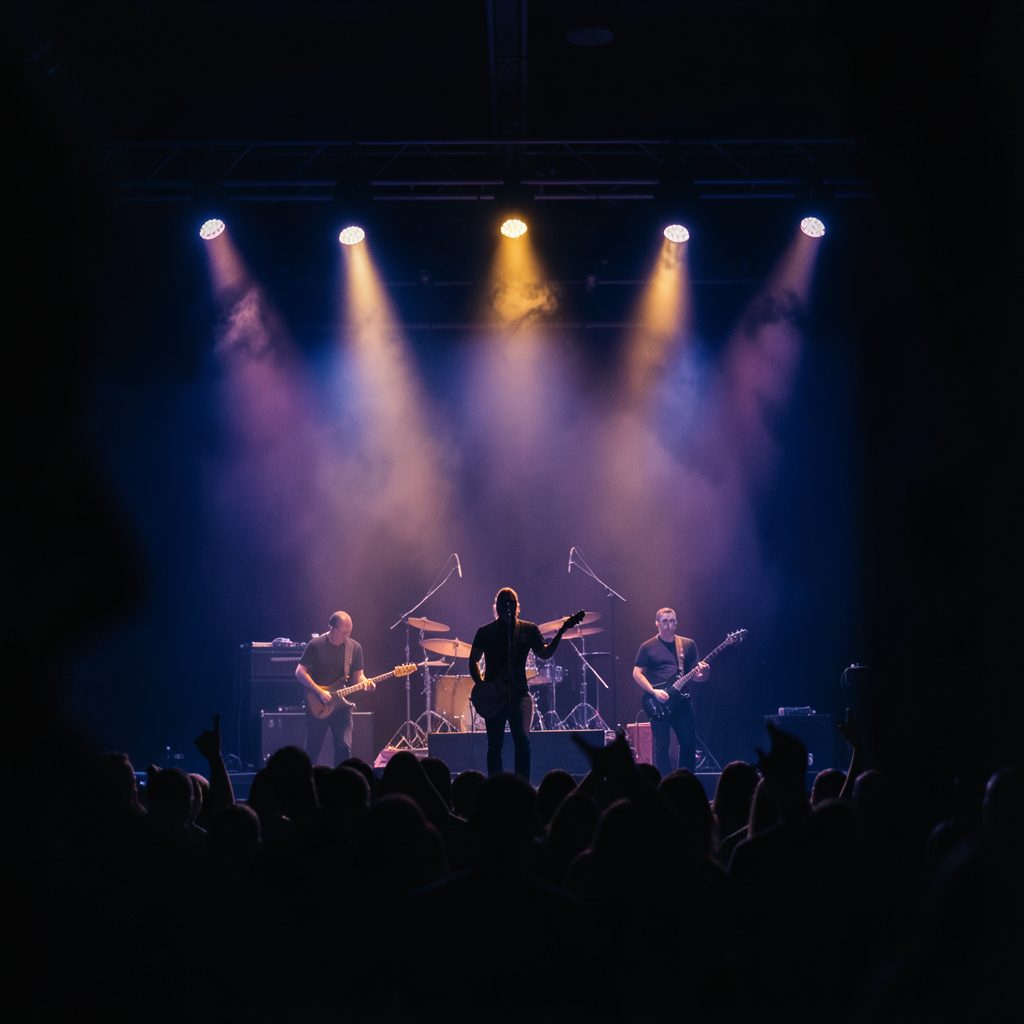
Lighting would be one of the most important parts of an elaborate Saving Abel concert. Bright white beams can emphasize drum hits and guitar accents, while red, amber, and blue washes create distinct moods across the setlist.
Moving lights positioned above and behind the band would create fan-shaped beams through atmospheric haze. Carefully timed backlighting could turn the musicians into dramatic silhouettes before a chorus, then shift forward to reveal the performers as the song reaches its peak.
A professional lighting design also protects the audience experience. Effects should add power without becoming distracting, and transitions should follow the music rather than operate as random flashes. The strongest moments would come from contrast: darkness before a reveal, stillness before a burst of movement, and focused light during an emotional vocal passage.
| Production Element | Live Function | Visual Effect |
|---|---|---|
| Elevated drum riser | Improves sightlines and stage balance | Gives the rhythm section greater presence |
| LED backdrop | Carries logos, textures, and motion graphics | Makes the set feel larger and more immersive |
| Overhead truss | Supports moving lights and atmospheric equipment | Adds height and depth to the stage picture |
| Side video panels | Extends visibility across wide venues | Keeps distant fans connected to the performance |
| Haze system | Reveals beams and lighting movement | Creates a dramatic concert atmosphere |
Sound And Stage Movement
A dramatic stage is only successful when the audio remains clear. The front-of-house system would need enough headroom for dense guitar tones, forceful drums, and expressive vocals without allowing the mix to become harsh or indistinct.
Monitor technology could give each performer a consistent mix while reducing cable clutter around the stage. Wireless guitar systems and in-ear monitors would also support movement, allowing the band to use the full width of the platform during high-energy songs.
Stage movement should feel natural rather than choreographed for its own sake. A vocalist stepping onto the front riser, a guitarist crossing toward a side platform, or the drummer receiving a focused lighting cue can create visual punctuation while preserving the authenticity of a rock performance.
Festival Scale And Club Flexibility
The most ambitious setup would be designed in several production sizes. At a festival, the full LED wall, extended truss, and expanded lighting package could create a wide cinematic image. In a theater, the same concept could be condensed without losing its central identity.
Clubs require an even more efficient approach. A compact riser, a smaller backdrop, and a focused lighting package can preserve the band’s signature atmosphere while fitting tight load-in schedules and limited stage dimensions.
This flexibility matters because live audiences experience the band in very different spaces. A scalable design ensures that a performance feels intentional whether fans are standing near a small stage or watching from the back of a large outdoor field.
Details That Turn A Concert Into An Event
Small production choices can make the elaborate setup feel personal. A branded microphone stand, custom drum-front graphic, illuminated stage logo, or carefully timed blackout can become a recurring signature that fans associate with the band.
Between songs, screens could display tour imagery, candid photographs, or short visual transitions rather than leaving the stage inactive. These details connect the concert to the wider world of band news, event photography, merchandise, and fan activity.
A strong live production also leaves room for spontaneity. The set should provide structure, but the performers need freedom to extend a solo, address the crowd, or react to the energy in the room. The technology should frame those moments, not compete with them.
Fans can follow Saving Abel’s official updates, check upcoming appearances, and watch for new music or merchandise through the band’s online channels. When the lights rise and the first guitar enters, that preparation becomes part of a complete live experience—one built to be seen, heard, and remembered.