The Story Behind Our Album Art: A Visual Journey
Before a song reaches a stage, it often exists as a feeling, a phrase, or a single image. Album artwork gives that feeling a physical shape. For Saving Abel, the visual side of our music has always helped frame the emotional weight of the songs, from hard-driving rock anthems to more reflective moments.
The story behind our album art is a visual journey through changing seasons of the band. Each cover, photograph, and design choice carries traces of where we were creatively and what we wanted listeners to feel before the first note played.
Artwork may be silent, but it still speaks. It can suggest tension, movement, isolation, confidence, or release. When it works, the image becomes part of the record’s identity and stays with fans long after the music ends.
Turning Sound Into An Image
The first step is finding the emotional center of a release. A record may contain many different moods, but its cover needs to communicate the atmosphere holding those songs together. We look for visual ideas that feel direct rather than decorative.
Rock music often carries a sense of motion and impact, so strong contrast, dramatic lighting, and textured surfaces can feel natural. At other times, a restrained image says more. An open landscape, a close portrait, or a weathered detail can create space for the listener’s own interpretation.
From First Sketch To Final Cover
Album design is a collaborative process. Musicians, photographers, designers, and creative directors bring different perspectives to the same material. Lyrics and demos can inspire a visual direction, while a photograph or color palette may reveal something about the songs we had not fully recognized.
The final cover is usually the result of refinement. Early concepts might be bold and complicated, but the strongest idea often becomes clearer after unnecessary elements are removed. Typography, scale, color, and placement all matter because they determine how the artwork appears on a record sleeve, a streaming screen, or a phone.
Visual Motifs That Follow The Band
Certain elements naturally return across our visual identity. Darker tones can reflect the grit of our guitar sound, while warmer colors suggest memory, energy, and the human side of the songs. Weathered textures connect with the honesty of rock and roll, where imperfections are often part of the character.
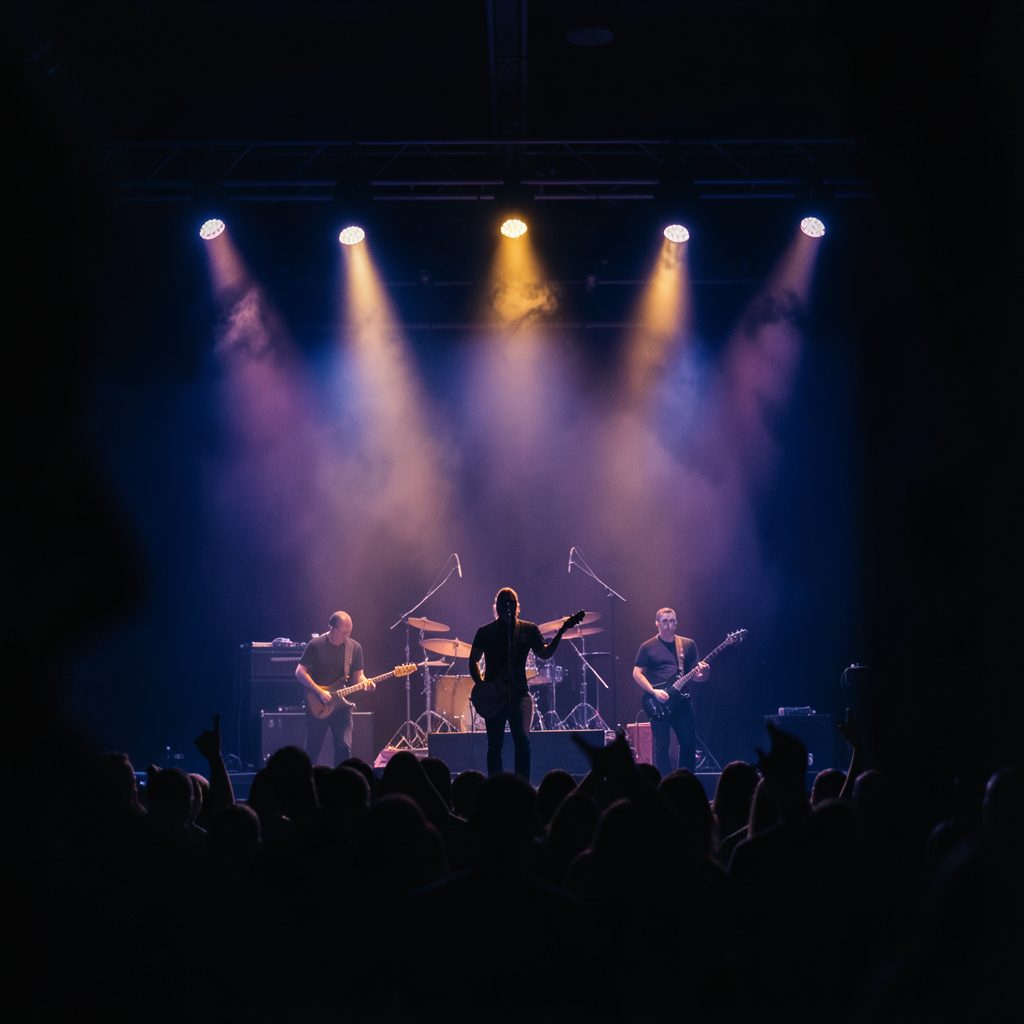
Photography also plays an important role. A live image can capture the physical connection between a band and its audience, while a carefully staged portrait can show a different kind of intensity. The goal is never to make the picture feel separate from the music. It should look as though it belongs to the same world.
How Artwork Frames The Listening Experience
A cover is often the listener’s first encounter with an album. Before the opening track begins, the image establishes a tone and creates a small invitation into the record. That first impression can shape how people approach the songs, especially when the visual language and musical themes support each other.
Singles create a similar challenge on a smaller scale. A single image must stand on its own while still connecting to the band’s broader story. Fans can explore that relationship through our first-listen breakdown, where the song’s character and creative details come into sharper focus.
| Visual Element | What It Can Communicate | Connection To The Music |
|---|---|---|
| High contrast | Tension, urgency, impact | Heavy riffs and emotional release |
| Warm color | Memory, intimacy, resilience | Personal lyrics and reflective passages |
| Weathered texture | History, grit, authenticity | The lived-in character of rock |
| Open space | Isolation, freedom, possibility | Quiet moments and room to breathe |
| Live photography | Energy and connection | The shared experience of a concert |
The Role Of Fans In The Image
Album art does not belong to the band alone once it reaches the world. Fans bring their own memories to it. A cover can become linked with a first concert, a long drive, a difficult year, or the moment someone discovered a favorite song.
That personal connection is one reason visual details matter. A symbol that feels simple to us may carry a deeper meaning for someone else. Artwork becomes part of the shared language between Saving Abel and the people who have supported our music through every chapter.
Building A Living Visual Identity
Our artwork continues to evolve as the band moves forward. New recordings, performances, photographs, and creative projects add fresh layers without erasing what came before. A visual identity should have continuity, but it should also leave room for change.
The best album covers remain connected to their time while still feeling lasting. They preserve a snapshot of the band’s mindset and invite listeners to revisit it years later. That balance—personal history with an open door for interpretation—is what makes music artwork powerful.
Bring The Story Home
- Explore album covers alongside the songs they represent.
- Look closely at recurring colors, symbols, and photographic details.
- Follow band news for new recordings, artwork, and creative updates.
- Visit a live show and experience the visual world of the music in person.
The next chapter is already taking shape through new songs, performances, and ideas. Follow Saving Abel through the official website and social channels, discover the latest releases, and stay close to the images that help bring our music to life.