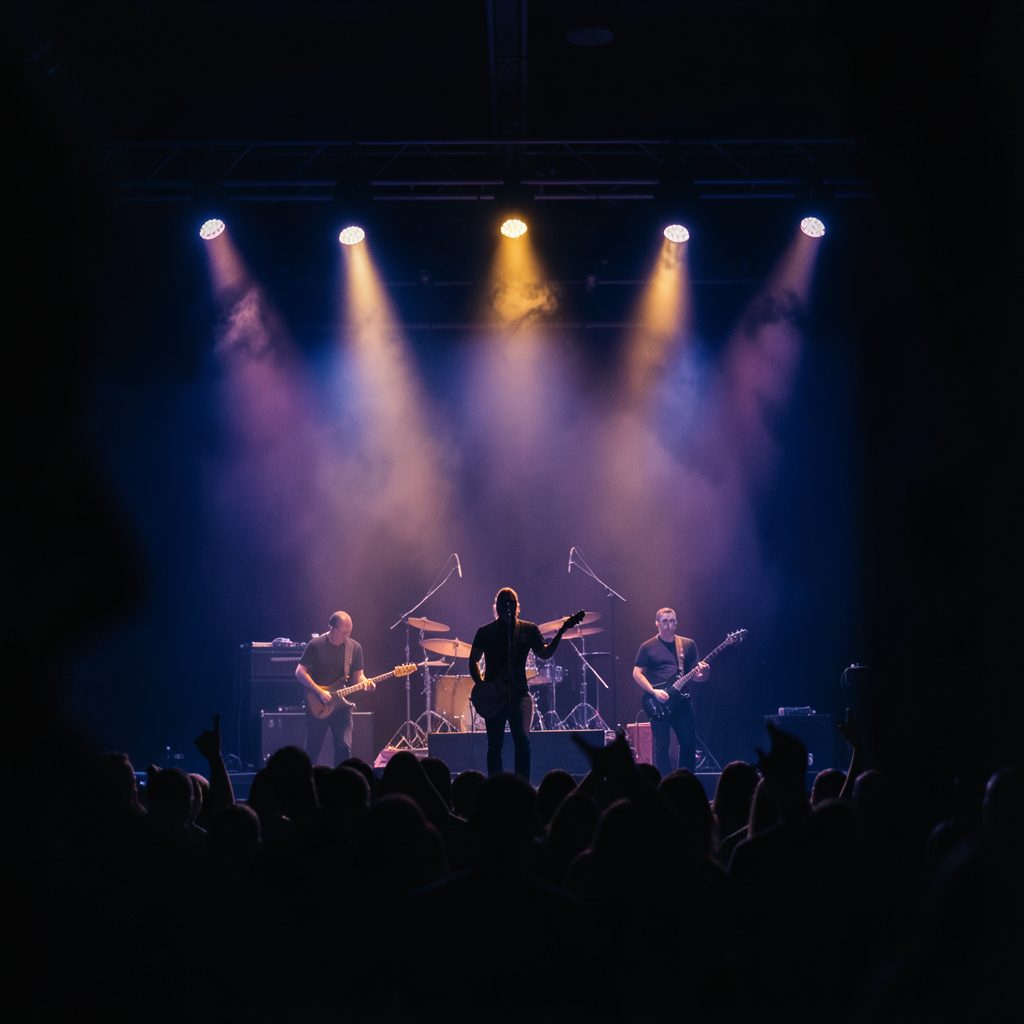
Saving Abel’s live guitar rig and tone setup
Saving Abel’s sound is built around heavy rhythm guitars, clear chord definition, and enough gain to carry a modern rock chorus without burying the vocal. The equipment used on stage and in the studio supports that balance, combining familiar electric guitar designs with dependable amplification and a focused pedalboard.
A touring rig is rarely identical from one performance to the next. Guitarists change strings, tunings, amplifiers, and effects to suit a venue, production company, or recording project. The band’s official updates and live appearances show a practical approach: reliable equipment comes first, while the final tone is shaped around the song.
The guitars behind the sound
The most suitable guitars for Saving Abel’s style are solid-body instruments with strong midrange and powerful bridge pickups. Les Paul-style guitars are a natural fit for thick riffs and sustained lead parts, while double-cutaway designs offer easier upper-fret access and a slightly more open response.
Humbucker-equipped guitars are especially useful for the band’s drop-tuned rock arrangements. They keep low notes firm and reduce unwanted noise when the amplifier is driven hard. A backup guitar is essential on tour, and many players prepare a second instrument with the same tuning, string gauge, and pickup output as the primary guitar.
Tunings, strings, and stage reliability
Lower tunings help produce the weight associated with post-grunge and alternative metal, but they can also make loose strings sound unfocused. A heavier string set gives the picking hand better control and keeps power chords tight. Intonation, fresh batteries, and properly adjusted bridges matter just as much as the guitar brand.
A touring guitarist also needs consistency under bright stage lights, changing temperatures, and long travel days. That is why a familiar neck profile, stable tuning machines, and durable hardware often matter more than collecting several expensive instruments. The best guitar is the one that responds predictably throughout a full set.
Amplifiers that provide weight and clarity
Saving Abel’s guitar tone depends on an amplifier with strong clean headroom and a controlled high-gain channel. British-style stacks can supply aggressive upper-mid bite, while American-voiced amplifiers often provide a broad low end and a tighter modern attack. Either approach can work when the cabinet, speakers, and microphone placement are matched carefully.
Live engineers usually avoid excessive bass in the guitar channel. The kick drum and bass guitar already occupy much of that space, so the guitar is shaped to remain powerful in the middle frequencies. A moderately driven amp, supported by microphone technique and venue-specific equalization, often sounds larger than an overloaded setting.
| Rig element | Practical choice | Role in the mix |
|---|---|---|
| Main guitar | Solid-body with humbuckers | Thick rhythm tone and sustain |
| Backup guitar | Matching scale and tuning | Fast replacement during a show |
| Amplifier | High-gain head or dependable modeler | Core distortion and dynamics |
| Cabinet | Closed-back 4x12 or matched speaker setup | Focused low end and projection |
| Tuner | Dedicated pedal or rack tuner | Accurate changes between songs |
| Delay | Short digital or analog-style repeat | Leads and spacious transitions |
| Noise control | Gate or careful gain staging | Cleaner pauses and stops |
A focused pedalboard
The pedalboard does not need to be crowded to support this kind of music. A tuner, noise gate, overdrive, delay, and occasional modulation effect can cover most live requirements. The overdrive is often used to tighten the amplifier rather than create all of the distortion itself, reducing loose low frequencies before the signal reaches the amp.
A noise gate is valuable for high-gain passages with abrupt stops. Delay can add depth to a lead without making the rhythm sound washed out, while a subtle chorus or phaser may appear in selected textures. Effects are most effective when they serve a particular section of a song instead of remaining active throughout the entire performance.
How rhythm and lead tones are separated
A convincing two-guitar arrangement requires more than two distorted sounds. One part may use a tighter, brighter setting, while the other carries additional thickness or a slightly different pickup position. Small changes in gain, presence, and midrange help each guitar occupy its own space.
Lead tones usually receive a volume boost, extra sustain, or a controlled delay repeat. The boost should raise the guitar above the rhythm section without becoming harsh. Many players achieve this with an overdrive or clean boost placed before the amp, combined with a modest adjustment from the amplifier or digital rig.
Studio choices and live translations
Recording sessions allow the band to layer several guitars, amplifiers, microphones, and effects. A rhythm track may be doubled with different guitars or panned across the stereo field, creating width that a single stage cabinet cannot reproduce. Engineers can also re-amp a performance through several amplifier voices before choosing the final blend.
On tour, the priority changes to repeatability. A compact pedalboard, a backup signal path, and clearly labeled presets help preserve the character of the recorded songs without making setup unnecessarily complicated. Digital modelers and load-box systems can also deliver consistent direct tones when a traditional amplifier is impractical.
Building a similar road-ready rig
Players who want the Saving Abel-style approach should begin with strong fundamentals rather than chasing one exact model. Choose a comfortable humbucker guitar, a medium-to-high-gain amplifier, and a cabinet or speaker simulation that keeps the low end controlled. Then adjust the rig at performance volume, because settings that sound huge alone may overwhelm the full band.
- Use heavier strings when tuning below standard pitch.
- Set gain lower than expected and add volume for definition.
- Place an overdrive before the amp to tighten palm-muted riffs.
- Add a noise gate only strongly enough to preserve natural sustain.
- Keep delay and modulation subtle until the arrangement calls for them.
Saving Abel’s equipment choices are best understood as a working system: dependable guitars, muscular amplification, and a concise effects chain shaped for live rock. Follow the band’s official news, tour updates, and performance posts for the latest information on current members, recordings, and stage setups.